The U.S. wedding services market is projected to grow to more than $105 billion by 2034. But the bigger story for wedding professionals may be what couples will be buying—and how the industry packages it.
The wedding industry may be heading toward a significant period of growth.
A new market report projects the United States wedding services market will increase from $62.74 billion in 2025 to $105.82 billion by 2034.
That’s an increase of more than $43 billion in less than a decade.
The Research and Markets report, produced by Renub Research, projects a compound annual growth rate of 5.98% from 2026 through 2034.
For wedding professionals, however, the headline number may be less important than what’s behind it.
The report points to several forces driving the market, including increased demand for personalized weddings, destination celebrations, social media influence and greater use of professional wedding services.
It also identifies something that deserves particular attention:
Couples are increasingly interested in experience-driven celebrations.
That could create an entirely different kind of opportunity for wedding businesses.
What Is Included in a $62.74 Billion Wedding Industry?
The wedding services market extends well beyond venues and wedding planners.
The report tracks categories including catering, decoration, entertainment and music, photography and videography, wedding planning and additional wedding services.
It also separates local and destination weddings and tracks online and offline booking.
In other words, this isn’t simply a projection that couples will buy more wedding dresses or pay higher venue prices.
It reflects a broad ecosystem of businesses involved in creating weddings.
And another 2026 U.S. wedding-services analysis points in a similar direction, identifying personalized and experience-led celebrations as an important market trend.
The traditional wedding isn’t disappearing.
But what couples expect from it is evolving.
Personalization Is Becoming Part of the Product
For years, wedding professionals have talked about personalization.
Couples don’t necessarily want their wedding to look exactly like the wedding held at the same venue the previous Saturday.
They want their personalities, families, cultures, interests and stories reflected in the celebration.
That can affect everything from food and music to décor and entertainment.
It also creates opportunities for wedding businesses capable of moving beyond standardized offerings.
A caterer might incorporate a family recipe.
A bar company might create cocktails connected to places the couple has traveled.
A band could perform music connected to the couple’s cultural background.
A venue might transform an underused area into an entirely different part of the celebration.
A planner might create activities specifically for out-of-town guests.
The product becomes more than the physical item being delivered.
It becomes part of the story of the wedding.
The Wedding Day Is Getting Longer
Another significant development is the growth of destination and multi-day weddings.
A wedding that once consisted primarily of a ceremony and reception can now involve several events.
Guests arrive Friday.
There may be a welcome party that evening.
Saturday begins with separate getting-ready experiences, followed by the ceremony, cocktail hour, reception and perhaps an after-party.
Sunday brings everyone together again for brunch.
For destination celebrations, additional activities can be added before or after those events.
Every additional gathering potentially creates another need for venues, food, beverages, entertainment, photography, transportation, rentals, décor and planning.
That changes the economics of a wedding.
Instead of one event generating business for a group of wedding professionals, one wedding can generate several connected events.
For wedding businesses, that raises an interesting question:
Are we still selling a wedding day when couples may be planning a wedding experience?
Social Media Has Changed What Couples See
Social media is also influencing the market.
Couples can now see thousands of weddings before planning their own.
They aren’t limited to ideas from weddings they’ve personally attended or photographs in magazines.
A bride in Ohio can watch a destination wedding in Italy before breakfast, see a luxury reception in New York at lunch and discover an unusual guest experience from California that evening.
That exposure can increase expectations—but it can also increase possibilities.
Couples may discover ideas they didn’t know existed.
For wedding businesses, visual platforms have therefore become more than advertising channels.
They can create demand.
A couple can’t request an experience they’ve never seen or imagined.
Show them what’s possible, and suddenly something that wasn’t originally in the wedding budget may become something they value.
Growth Doesn’t Mean Couples Have Unlimited Budgets
There is an important reality behind all these projections.
A growing wedding market does not mean every couple suddenly has unlimited money to spend.
Another U.S. wedding-services analysis published this year identifies affordability pressure as a significant challenge. Couples continue to balance wedding costs against housing, debt, savings and other financial priorities.
That means wedding professionals shouldn’t interpret a $105 billion forecast as permission to simply raise prices or add charges.
Businesses need to create something couples perceive as worth buying.
And that brings us to perhaps the biggest opportunity hidden inside these numbers.
From Selling Services to Packaging Experiences
Wedding businesses have traditionally sold services in units.
Six hours of venue rental.
Eight hours of photography.
Four hours of entertainment.
Dinner priced per person.
A floral package containing a certain number of bouquets, centerpieces and boutonnieres.
There is nothing inherently wrong with that model. Couples need to understand what they are purchasing, and businesses need clear parameters for pricing and staffing.
But couples don’t experience their weddings in units.
They experience moments.
They remember getting ready with their closest friends.
They remember seeing each other for the first time.
They remember walking into the reception.
They remember the cocktail everyone talked about.
They remember the song that filled the dance floor.
They remember eating pizza at midnight.
They remember sitting around a fire with their closest friends after most of the guests had gone.
They remember meeting everyone again for brunch the next morning.
Those moments can become experiences.
And experiences can become packages.
What Could an Experience Package Look Like?
Consider the venue.
Instead of marketing only a Saturday ceremony-and-reception rental, a property might create a Wedding Weekend Experience.
Friday could include a welcome gathering.
Saturday morning could include dedicated getting-ready spaces, breakfast and photography locations.
The ceremony and reception follow.
After the reception, guests could move to a firepit, lounge or after-party space.
Sunday could conclude with brunch.
One venue. One wedding. Multiple experiences.
The same thinking can apply throughout the industry.
A caterer could create a Late-Night Experience featuring hometown foods, food trucks, specialty drinks or a menu connected to the couple’s story.
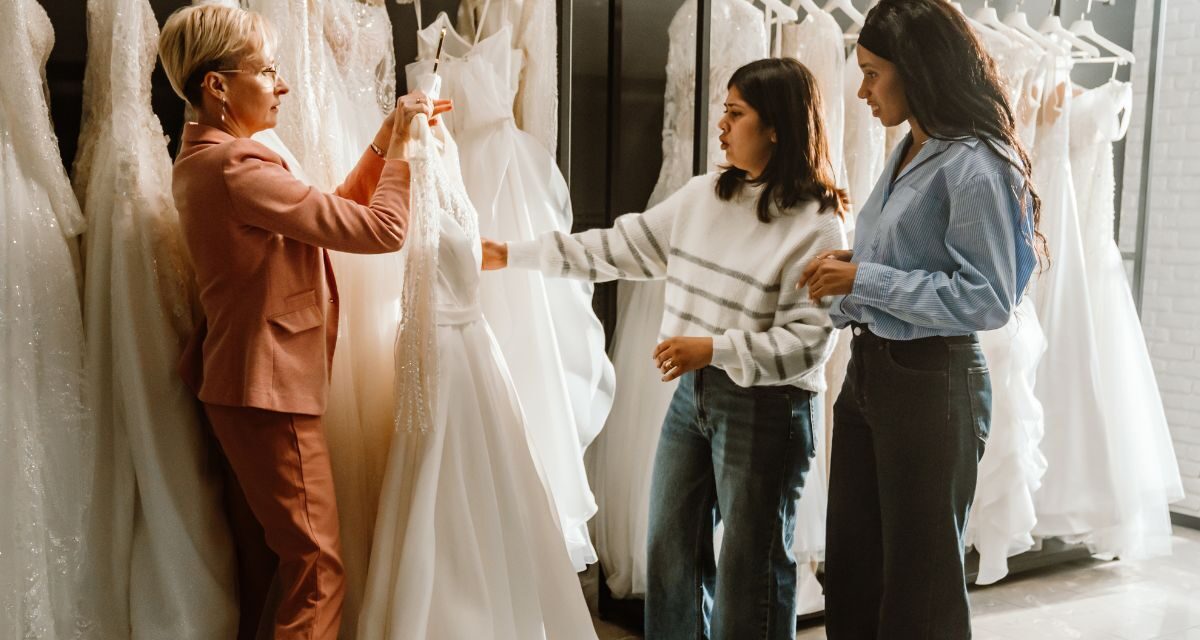
A bridal boutique could create a private Say Yes Experience, turning dress shopping into a celebration for the bride and the people closest to her.
An entertainment company could package the entire progression of the evening—cocktail-hour music, introductions, dinner, dancing, lighting and the final song—rather than presenting itself primarily as four or five hours of DJ service.
A photographer or filmmaker could offer a Wedding Weekend Story, documenting the welcome party, wedding day and farewell brunch rather than simply adding more coverage hours to an existing package.
A planner could create curated experiences for out-of-town guests.
Transportation companies could offer sightseeing or destination experiences between scheduled wedding events.
Even businesses that traditionally sell products can think this way.
A cake tasting can become an experience.
A floral consultation can become an experience.
A bridal appointment can become an experience.
A venue tour can become an experience.
Package the Feeling, Not Just the Features
There is also a marketing lesson here.
Wedding professionals often describe their businesses by listing what’s included.
Seats 200 guests.
Eight hours of coverage.
Includes tables and chairs.
Four hours of DJ service.
Three-course dinner.
Those details are important.
But they aren’t necessarily what makes someone imagine having their wedding with you.
Consider the difference between advertising:
“Outdoor firepit available.”
and showing couples:
“When the reception ends, invite your closest friends to stay for drinks around the fire.”
It’s the same firepit.
But now it has a purpose.
You’re no longer marketing an amenity.
You’re selling the moment that could happen around it.
Look at the Entire Wedding Journey
One way wedding businesses can begin identifying these opportunities is to stop looking only at the portion of the wedding they currently serve.
Look at the entire journey.
What happens before your service begins?
What happens immediately afterward?
Where are guests waiting?
Where are couples stressed?
Where is there an opportunity to surprise someone?
What part of the celebration currently feels ordinary?
And perhaps most importantly:
Is there an experience you could create around that moment?
That doesn’t necessarily mean doing everything yourself.
Some of the strongest experience packages could come from collaboration.
A venue, caterer and entertainment company could create an after-party package.
A bridal boutique could partner with a restaurant or champagne company.
A photographer could partner with a planner on a proposal experience.
A hotel, transportation company and planner could build a destination guest package.
Collaboration allows businesses to create something larger without each company having to become something it isn’t.
Wedding Market News Editor’s Take
The projected growth from $62.74 billion to $105.82 billion is impressive.
But wedding professionals shouldn’t look at that additional $43 billion and simply ask:
How do we get couples to spend more money?
That’s the wrong question.
The better question is:
What can we create that couples would be excited to buy?
There is a significant difference.
Adding another charge to an existing service isn’t innovation.
Creating something that makes the wedding easier, more personal, more enjoyable or more memorable can be.
The next generation of wedding packages may not be defined solely by hours, quantities and traditional service categories.
They may be defined by experiences.
A welcome experience.
A getting-ready experience.
A tasting experience.
A guest experience.
A late-night experience.
A wedding-weekend experience.
Start looking at the wedding not simply as a collection of vendors but as a series of moments.
Then ask which of those moments your company could make better.
Because if the U.S. wedding services industry really is headed toward $105 billion, the opportunity isn’t simply to sell more of what we’ve always sold.
It’s to rethink what a wedding business can package, market and create.
Couples aren’t simply buying a wedding day. They’re investing in how that day—and increasingly that entire weekend—will feel.
And that may be where some of the wedding industry’s most interesting growth is waiting.